“My God and My All”
— St. Francis of Assisi
There are prayers we learn with our lips, prayers we memorize, and prayers we faithfully repeat throughout our lives. But every so often, a prayer travels from the lips into the heart and becomes something more. It becomes a way of living.
For St. Francis of Assisi, that prayer was beautifully simple:
“My God and my All.”
Francis had discovered a beautiful truth: when God comes before all else, everything else begins to find its proper place. God is no longer simply Someone we turn to in moments of need. He becomes the center of our lives—the One from whom we come, the Presence in whom we live, and the loving Father toward whom our lives are continually being drawn.
Perhaps this is also the invitation at the heart of the prayer Jesus Himself gave us:
“Our Father…”
Before we ask for our daily bread, before we seek forgiveness, and before we ask to be delivered from evil, Jesus teaches us to begin not with a request, but with a relationship.
Father.
Papá Dios.
Jesus does not teach us to approach a distant or unreachable God. He draws us into His own relationship with the Father and teaches us that we may come before God as His beloved children. Before anything is asked of Him, we are invited simply to know Him, to belong to Him, and to trust Him.
What an extraordinary gift. The God whom Francis called “My God and my All” is the same God whom Jesus teaches us to call Father.
And this is so beautifully simple. To say, “My God and my All,” is not merely to speak words of devotion. It is to place God first—to trust that He is enough, that He is present, and that our lives can be surrendered into His hands.
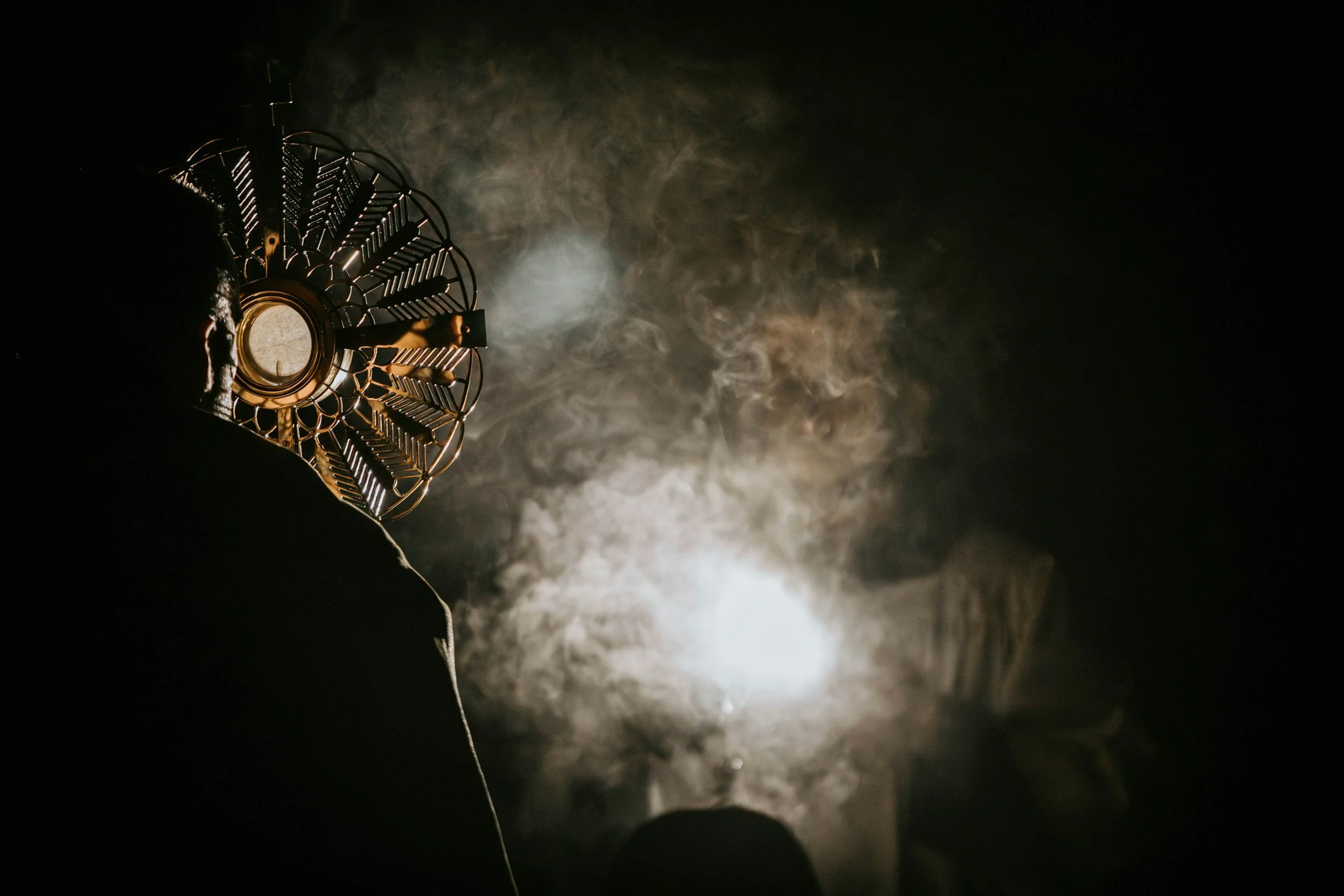
We glimpse this trust in St. Clare of Assisi. When San Damiano was threatened, Clare turned to Christ in the Blessed Sacrament and entrusted the danger to Him. Yet the deepest meaning of that moment is not Clare herself, nor even the dramatic circumstances surrounding her. The heart of the story is God—the One in whom Clare placed her confidence.
The monstrance in her hands points beyond Clare and directly toward Christ. It reminds us that our security is not ultimately found in our own strength, our plans, or our ability to control what happens around us. Our security is found in the One who holds us.
And suddenly the words of Jesus become even more intimate:
“Our Father…”
The Our Father begins exactly where Francis and Clare learned to begin—with God.
Before “give us this day,” there is “Our Father.”
Before “forgive us,” there is “Our Father.”
Before “deliver us from evil,” there is “Our Father.”
Jesus teaches us first to remember Who God is. He is Father. He is holy. His Kingdom is our desire, and His will is the place where our lives find their true order. Only then do we bring Him everything else—our hunger, our failures, our relationships, our temptations, our fears, and all that we cannot control.
Perhaps this is what it truly means to pray the Our Father: not simply to recite words we have known since childhood, but to place our entire lives within them.
When we pray “give us this day our daily bread,” we are saying, Father, I trust You to provide what I need today.
When we pray “forgive us our trespasses,” we are saying, Father, I need Your mercy, and I trust Your love enough to extend that mercy to others.
When we pray “lead us not into temptation,” we are admitting that we cannot walk this journey by our own strength.
And when we pray “deliver us from evil,” we place even our deepest fears into the hands of the One who loves us.
This is the surrender Francis discovered. It is the trust Clare lived. It is the gift Jesus places upon our lips every time we pray:
Our Father.
Papá Dios.
The Father who loves us.
The Father who provides for us.
The Father who forgives us.
The Father who remains with us.
The Father into whose hands we can place everything.
Perhaps, then, living the Our Father is learning each day to make the prayer of Francis our own—not only with our lips, but with the whole of our lives:
My God. My Father. My All.
Ultimately learning, day by day, to live the prayer of Francis:
My God. My Father. My All.
Jesus teaches us to pray:
“Give us this day our daily bread.”
We naturally think of the food and necessities we need each day and rightly so. We depend upon the Father for everything. But as Catholics, those words can also awaken within us a Eucharistic longing.
Christ gives Himself to us as the Bread of Life. The One whom Francis called “my All” gives us His very self. Clare understood this. She did not simply believe in Jesus. She entrusted herself to Jesus.
And there is a difference.
Faith can remain something we profess with our mouths. Trust requires surrender. Learning to Pray as children is one of the great challenges of the Our Father. We can say it so often that the words become familiar.
Our Father, who art in heaven…
But what would happen if we stopped at those first two words?
Our Father.
What would happen if we truly allowed ourselves to recognize what Jesus is telling us?
You have a Father.
You belong to Him.
You are dependent upon Him.
You can trust Him.
And you do not come before Him alone, because Jesus teaches us to say our, not merely my.
Suddenly the Our Father becomes more than a private prayer. It becomes a way of seeing the world. If God is our Father, then the person beside me is my brother or sister.
The poor are my brothers and sisters.
The forgotten are my brothers and sisters.
The difficult person is still my brother or sister.
Creation itself becomes something entrusted to our care by the same loving Father.
The prayer begins to change how we live.
From Prayer to Life
So how do we live out this gift of prayer that Jesus has given us?
Perhaps we begin as Francis did—with surrender.
My God and my All.
When we wake in the morning:
My God and my All.
When we do not know what decision to make:
My God and my All.
When someone we love is suffering:
My God and my All.
When our plans fall apart:
My God and my All.
When we receive Christ in the Eucharist:
My God and my All.
And when fear comes, perhaps we can remember Clare who teaches us where to return.
Papá Dios
Not because every difficulty will disappear exactly as we wish, but because we no longer face it alone.
The Father is with us.
Padre Nostro
Maybe this is what Jesus has been trying to teach us all along. Prayer is not about finding the perfect words. It is about relationship. It is learning to stand before God with the simplicity of Francis, the trust of Clare, and the confidence of a child who knows the Father loves them.
Our Father.
Papá Dios.
You are my God.
You are my Father.
You are my daily bread.
You are my strength when I am afraid.
You are my hope when I cannot see the road ahead.
You are the One to whom I surrender everything.
My God and my All.
And perhaps the greatest lesson of the Our Father is that after we rise from prayer, we must become what we have prayed.
If we ask for bread, we must be willing to share bread.
If we ask for forgiveness, we must become forgiving.
If we ask that God’s will be done, we must be willing to do it.
If we call God our Father, we must learn to recognize one another as brothers and sisters.
Then prayer is no longer something we simply say.
Prayer becomes the life we live.
¡Palante, Siempre Palante! ("Forward, Always Forward")
To Jesus through St. Francis
Thank you for allowing me to be part of your spiritual journey! Keep at it! Keep praying. Love the Lord.
Peace and Grace.Fran Acosta,OFS