Dinner with the Saints
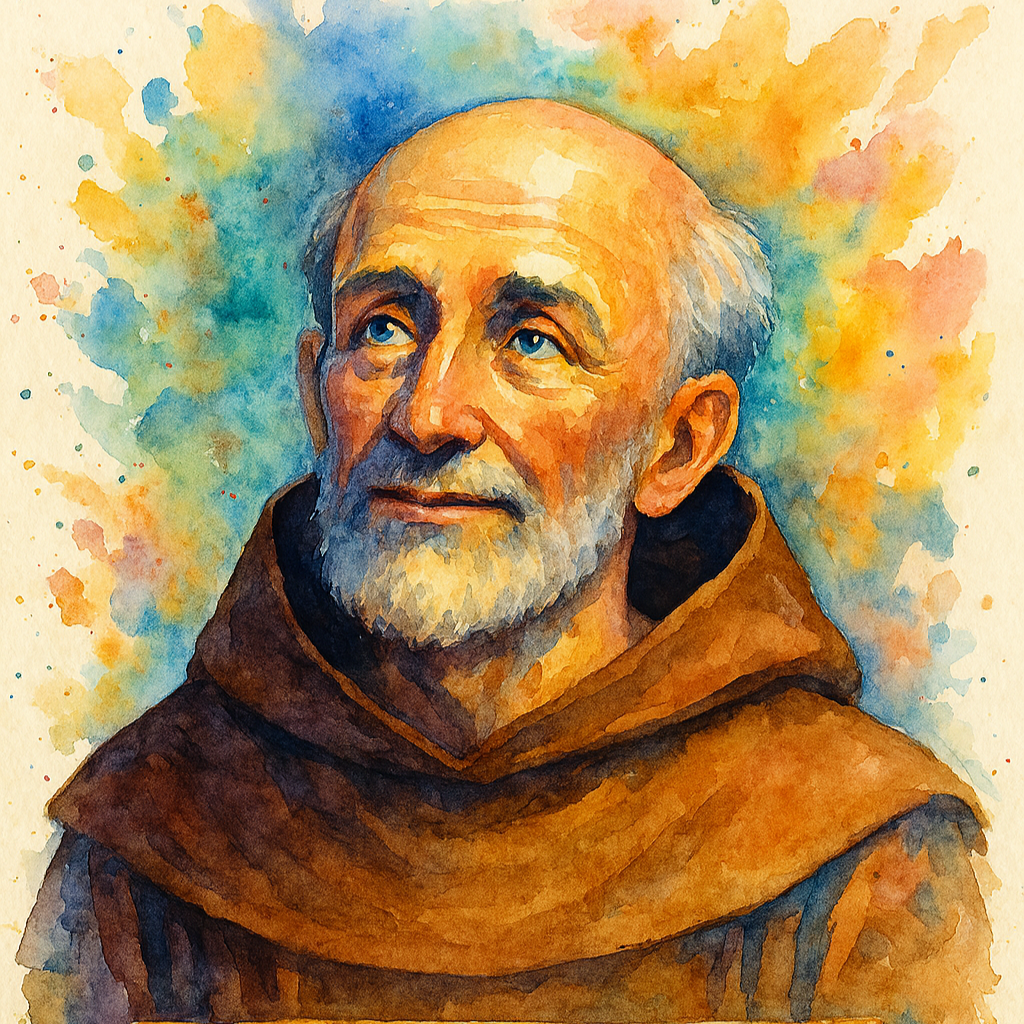
Blessed Giles,
Welcome to the table!
“ The word of God does not belong to him who bears or speak it, but to him who puts it into practice.” -
Giles of Asissi
What’s for dinner?
Simple, poor, and often dependent on alms—meals were humble and rooted in the typical 13th‑century Umbrian diet. Thus this meal would be more Franciscan in nature. Barley or another coarse staple food, usually minimally seasoned. Lentil stew simmered with onion or a little garlic, sometimes flavored with herbs from the garden. Salted fish prepared with rosemary, sage, or parsley, accompanied by foraged greens. Sheep’s-milk cheese, common in rural Umbria, typically in simple aged varieties. Water and diluted wine rounded out the modest repast.
Last year Blessed Giles was my companion saint. I drew his name from the basket during our fraternity’s annual extraction of saints, and his gentle presence stayed with me throughout the year and continues to be a steady and uplifting inspiration of faith put into action. Giles met Francis shortly after Francis began gathering companions. On April 23, 1209, Giles asked to join him, and Francis joyfully welcomed him as the third brother of the growing community. Giles often performed manual labor—harvesting fields, carrying water, chopping wood—and embraced such work as a humble form of prayer. He is remembered for the simple wisdom he spoke: “Blessed is the monk who finds joy in the work of his hands.”
He traveled widely, offering spiritual counsel to peasants, nobles, and clergy alike, and became known for his short but profound sayings about work, charity, and contemplation.
“The soul has as many prayers as it has desires.”
“If you cannot pray long, pray often
“If you are humiliated, thank God; for it is the way of the true disciple.”
“The greater the love of God in the soul, the less the soul feels the weight of its trials.”
He traveled across Europe not to preach but to show humility and peace, earning respect from peasants and nobles alike.
Later in life he lived mostly in quiet prayer at the friary in Perugia, where he died with a growing reputation for holiness. He is most remembered as a model of Franciscan joy, a vigorous champion of manual labor, a man of deep and sustained contemplation, and one of the earliest witnesses to Francis’s radical vision of evangelical poverty. His spiritual insights and sayings remain widely quoted and influential in Franciscan spirituality today.
To read more about Blessed Giles you can read it online at:
https://archive.org/details/thegoldensayings00robiuoft/page/n7/mode/2up

Italian Lentil Soup
Click on the photo for recipe.

Thank you for allowing me to be part of your spiritual journey! Keep at it! Keep praying. Love the Lord.
Peace and Grace.Fran Acosta,OFS