Learning to See
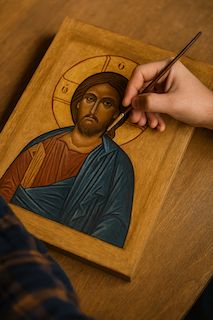
A Personal Invitation into Christian Iconography
Lately I’m drawn to iconography, not just religious art but a way of seeing. In a world of attention-grabbing images, icons do the opposite: they invite contemplation. They wait, and in that waiting the soul begins to listen.
Iconography is often described as “theology in color,” and the more I learn, the more that phrase rings true. Icons are not merely illustrations meant to tell a story; they are windows opening onto spiritual reality, invitations into the mystery of God made visible. For those of us involved in ministry, accompaniment, and formation, this way of seeing feels particularly relevant and deeply formative.
What Is Iconography?
Christian iconography, rooted in Eastern Orthodox and Eastern Catholic traditions, extends beyond them. An icon is more than a painting; it follows theological rules, symbolism, prayerful preparation, and restraint. Unlike Western art's realism and emotion, icons are flat, stylized, and symbolic—collapsing time and space, with inner light and solemn, timeless figures. They aim to shape the heart and soul, not to entertain the eye.
Iconography as Formation, Not Decoration
What most intrigues me about iconography is that it doesn’t ask, “What do I feel?” but rather, “Who am I becoming as I behold?” Icons aren’t passive décor; they are active partners in prayer.
In the context of ministry, this resonates deeply and personally. Many people are hungry for authenticity, spiritual depth, and tangible experiences of God that go beyond mere words. Icons offer a form of catechesis that is embodied, patient, and intentionally slow, inviting prayerful attention and allowing quiet contemplation to do the work that hurried explanation sometimes cannot accomplish.
Painting an icon is formative: iconographers fast, pray, and prepare spiritually before beginning. The icon is not a personal signature but an offering to the Church, challenging modern ideas of ownership, creativity, and visibility while teaching humility.
Learning to “Read” an Icon
Icons are meant to be read as much as seen. Every color, gesture, and spatial choice carries meaning:
Gold backgrounds signify divine light and eternity
Elongated figures suggest transfigured humanity
Large eyes represent spiritual attentiveness
Inverse perspective places the viewer inside the scene
This makes iconography an especially rich teaching tool. It encourages viewers students included to slow down, notice details, and ask deeper questions.
What am I being shown? Where am I placed in this scene? What is being revealed about God and about me?
A Work to Dive Into: The Road to Emmaus
If I were to choose one icon to study deeply in a class or to pray with in ministry, it would be The Road to Emmaus (Luke 24:13–35). You may recall this Gospel from the third Sunday of Easter. The story is timeless, yet it always speaks anew, offering fresh insight and consolation each time we return to it. (See below.)
This scene captures something essential about faith formation. Two disciples walk in confusion and disappointment. The risen Christ walks with them, unrecognized, opening the Scriptures as they go. Only later, at the breaking of the bread are their eyes opened.

Icon of Christ Walking with the Disciples on the Road to Emmaus (Byzantine tradition). In iconography, the viewer is invited to join the journey rather than observe it from a distance. source Pintrest: Claude Choueiri
In iconographic renditions of Emmaus, Christ is often shown at the center, slightly leading the way, while the disciples gesture toward him in attentive conversation. Their faces reveal quiet seriousness rather than dramatic emotion, conveying contemplative recognition. The road stretches forward into the distance, drawing the viewer gently into the unfolding journey.
To me, what makes this icon so powerful is that we are invited to be the third companion on the road, walking alongside and sharing the journey with attentive, compassionate hearts. This image feels almost vocational in its quiet, persistent call, gently summoning us to a deeper life of presence and faithful service. It reflects the slow, patient work of accompaniment, where Christ is already present even when not immediately recognized or understood. It reminds us that true understanding often comes only after walking together, listening deeply, and sharing life, rather than before. It deeply reminds me of why I started this ministry and continues to steady my commitment to accompany others with humility and hope.
Why I’m Considering a Class
Studying iconography is more than learning a skill; it becomes a treasured tradition that reshapes how I pray, teach, and support others. A good class would teach both technique and spiritual discipline: when to speak, when to watch, when to wait, and when to accept mystery with humility. In a world already overwhelmed by noise and speed, icons quietly proclaim that God is not rushed, inviting patience and showing that truth can unfold slowly and gently over time.
Perhaps that is the greatest gift iconography offers us today: not quick answers at a glance, but a quiet invitation to linger, to look again, and to let our hearts be gently warmed along the way.
Next week we will once again use this same Gospel reading as the foundation for our guided meditation, returning to its quiet depths together.

Thank you for allowing me to be part of your spiritual journey! Keep at it! Keep praying. Love the Lord.
Peace and Grace.Fran Acosta,OFS